If you’ve paused mid-sentence wondering whether to type “authorization” or “authorisation,” you’re not alone. Both spellings show up constantly online, in software settings, and in official documents, which makes the confusion completely understandable. Here’s the good news: both spellings are correct, and the one you should use depends on which style of English you’re writing in.
The Quick Answer: Authorization vs Authorisation
“Authorization” is the standard spelling in American English. “Authorisation” is the standard spelling in British English. Both words mean the same thing: official permission or approval to do something. Neither spelling is a typo or a grammar mistake. The difference comes down to regional spelling conventions, not correctness.
If you’re writing for a US audience, use “authorization.” If you’re writing for a UK, Australian, or other Commonwealth audience, use “authorisation.”
What Does Authorization (or Authorisation) Mean?
Both spellings refer to the act of giving official approval, permission, or the power to do something. It can also refer to the document or code that grants that permission.
For example, a manager might give authorization for an employee to access a restricted file. A bank might send an authorisation code to confirm a payment. In both cases, the meaning is identical: something has been officially approved.
The word functions as a noun, and it’s the noun form of the verb “authorize” (or “authorise” in British English).
American English vs British English: The Real Difference
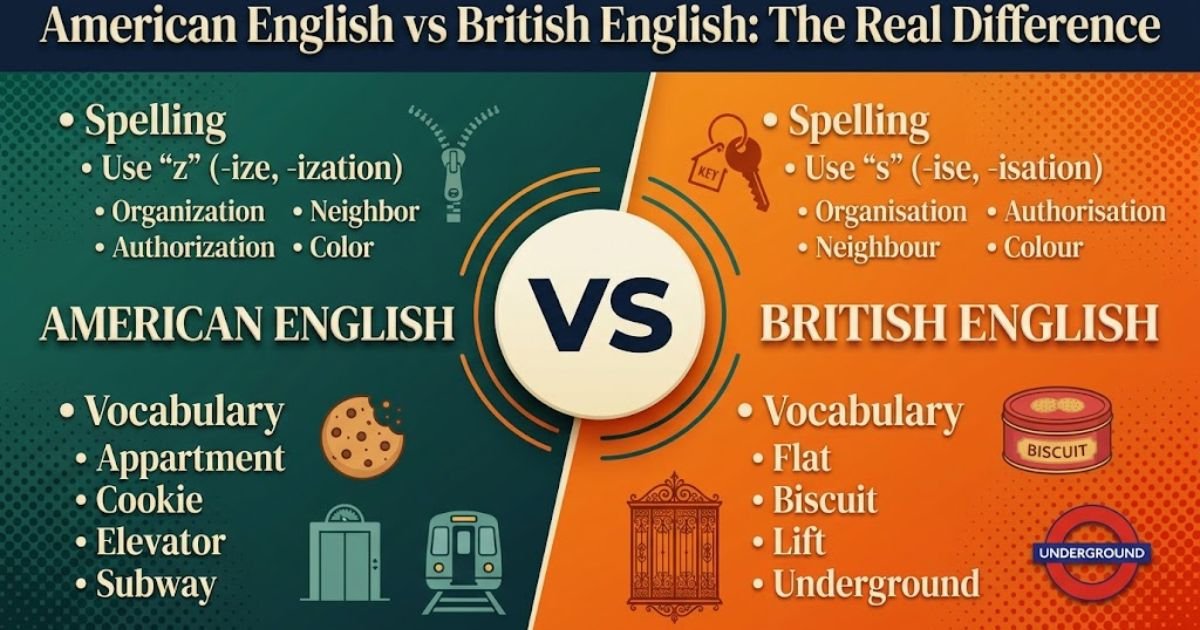
The core difference between these two spellings is the “z” versus “s.” American English almost always uses “z” in words like this: authorize, organize, realize, and authorization. British English traditionally favors “s”: authorise, organise, realise, and authorisation.
This isn’t unique to this word. It’s part of a broader pattern in English spelling that developed as American and British English diverged over the past two centuries.
One useful exception to know: some British publishers and institutions, including the Oxford University Press, actually prefer “-ize” spellings for historical and etymological reasons. This is sometimes called Oxford spelling. So you may occasionally see “authorization” in British academic or formal writing, even though “authorisation” remains far more common in everyday British usage.
Grammar Breakdown: Part of Speech and Spelling
Both “authorization” and “authorisation” are nouns. They are the noun forms of the verb “to authorize” (US) or “to authorise” (UK).
Here’s how the word family breaks down:
- Verb: authorize (US) / authorise (UK)
- Noun: authorization (US) / authorisation (UK)
- Adjective: authorized (US) / authorised (UK)
- Person who authorizes: authorizer (rarely used)
Notice that the spelling pattern stays consistent across the whole word family. If you use “z” spellings, use them throughout. If you use “s” spellings, stay consistent there too. Mixing the two within the same document looks inconsistent, even though each individual word is technically valid.
Read Related Post: Rumour or Rumor: Which Spelling Is Right in US English?
Where the Z and S Spelling Comes From (Etymology)
The word traces back to the Latin verb auctorizare, related to auctor, meaning “author” or “originator,” carrying the sense of someone with the authority to approve something. It passed into English through Old French, which used forms closer to the “s” spelling.
The “z” spelling that American English favors today actually reflects an older, more historically accurate rendering of the Greek and Latin roots, many of which used a “z” sound (represented by the Greek letter zeta). British English shifted toward the French influenced “s” spelling over time, while American English, largely shaped by Noah Webster’s 19th century spelling reforms, kept closer to the “z” form.
So while it might seem like American English invented the “z,” it’s actually the older spelling pattern in many cases.
How to Pronounce Authorization/Authorisation
Both spellings are pronounced the same way: aw-thuh-rih-ZAY-shun (four syllables, with the main stress on the third syllable). The “s” or “z” in the spelling does not change how the word sounds. This is purely a written difference, not a spoken one.
Singular, Plural, and Related Word Forms
“Authorization” and “authorisation” are typically used as uncountable nouns when referring to the general concept of permission.
Example: She needs authorization before proceeding.
However, the word can also be used as a countable noun when referring to a specific instance, document, or code.
Example: We received three separate authorizations for the project.
In that case, the plural forms are “authorizations” (US) and “authorisations” (UK), simply adding an “s.”
Authorization vs Authorisation: Comparison Table
| Term | Correct? | Region | Example Use |
| Authorization | Yes | American English | “I need authorization to access the server.” |
| Authorisation | Yes | British English | “I need authorisation to access the server.” |
| Authorized | Yes | American English | “The document is fully authorized.” |
| Authorised | Yes | British English | “The document is fully authorised.” |
| Authorizaton | No | Not a word | Misspelling, missing the “i” |
Real Life Examples in Sentences
Everyday conversation (American English):
“I can’t let you in without authorization from the front desk.”
Workplace communication (British English):
“Please get authorisation from your line manager before booking travel.”
Business writing (American English):
“This letter serves as formal authorization for the release of funds.”
Academic writing (British English):
“The study required ethical authorisation from the university review board.”
Emails (American English):
“Attached is your authorization code for the account update.”
Each of these sentences works correctly for its respective audience. If you swap the spelling to match the other region’s convention, the sentence is still grammatically fine, just stylistically inconsistent with the rest of the writing.
Common Mistakes to Avoid
Incorrect: She recieved authorization for the transfer.
Correct: She received authorization for the transfer.
This isn’t about the “z” versus “s” debate at all. It’s a common misspelling of “received,” which follows the “i before e except after c” pattern.
Incorrect: He needs authorisation, but the form uses American spelling for organize and realize.
Correct: He needs authorisation, and the form should consistently use organise and realise too.
Mixing American and British spelling conventions within the same document is the most frequent mistake. Pick one style and stay consistent.
Incorrect: Authorizaton was granted yesterday.
Correct: Authorization was granted yesterday.
This is a simple typo, dropping the “i” from the correct spelling.
Related Words and Terms
A few related terms worth knowing:
- Authorize / Authorise: the verb form, meaning to give official approval
- Authorized / Authorised: the adjective form, describing something officially approved
- Permission: a more general, everyday synonym
- Sanction: a formal synonym, though it can also mean the opposite (a penalty) depending on context
- Unauthorized / Unauthorised: the antonym, describing something done without approval
Which Spelling Should You Use? Practical Guidance
Your choice should be based on your audience, not personal preference. Here’s a simple way to decide:
- Writing for a US company, US clients, or a US based publication: use authorization.
- Writing for a UK, Irish, Australian, Canadian, or other Commonwealth audience: use authorisation (Canadian English is a bit of a mix, but “authorization” is more common there).
- Writing software documentation or code for an international audience: check your style guide, since many tech companies default to American spelling regardless of the reader’s location.
- Writing an academic paper: follow whatever spelling convention your institution or publisher requires.
Once you choose a spelling, apply it consistently throughout the entire document, including related words like “organize” or “organise.”
FAQ’s
Is “authorization” or “authorisation” correct?
Both are correct. “Authorization” is standard American English, and “authorisation” is standard British English.
What does authorization mean?
It means official permission or approval to do something, or the document or code that grants that approval.
Is “authorisation” a British word?
Yes, it’s the standard spelling used in British English and most Commonwealth countries, following the general British preference for “s” over “z” in words like this.
Can I use “authorization” in British English?
Yes, in some cases. Publishers that follow Oxford spelling, including Oxford University Press, prefer “-ize” endings even in British English. Outside of that context, “authorisation” is more common in the UK.
How do I use authorization in a sentence?
Example: “You’ll need authorization from your supervisor before submitting the report.” Simply swap in “authorisation” if you’re writing for a British audience.
Conclusion
Both “authorization” and “authorisation” are correct spellings of the same word, separated only by American versus British English conventions. The simplest rule to remember: match your spelling to your audience, and keep it consistent with the rest of your writing, including related words like “organize” or “organise.”

Smith Jason is an SEO expert with 2–3 years of experience, sharing grammar tips, confusing words, vocabulary and writing advice.










1 thought on “Authorization or Authorisation: Which Spelling Is Correct?”