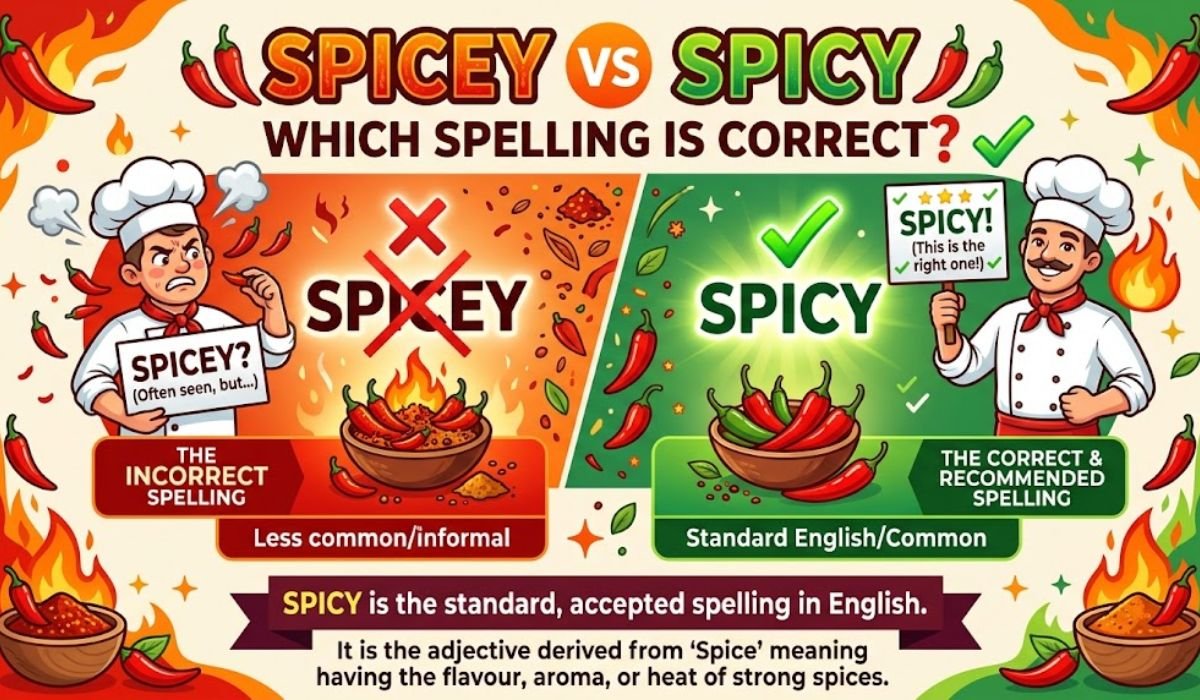
You are writing a menu note or a text about dinner when you stop: is it spicey or spicy? The extra e looks right because words like pricey and dicey use it. Still, the standard spelling is spicy. Spicey is a common misspelling, not an accepted variant. This guide covers the rule, the meaning, and a few easy ways to remember it.
Which Spelling Is Correct: Spicey or Spicy?
Spicy is the correct spelling. Spicey is incorrect in standard American and British English. Spicy is an adjective meaning flavored with spices, often with a hot or sharp taste. The word is formed from the noun spice plus the ending -y, and the silent e is dropped.
You can use spicy in any context: casual texts, school essays, business emails, restaurant menus, and formal writing. There is no situation in standard writing where spicey is the better choice.
What Does Spicy Mean?
Spicy has two main meanings, one literal and one figurative.
Literal meaning: Food that contains spices, especially ones that create heat or a strong, sharp flavor.
- “I ordered the spicy chicken sandwich.”
- “This salsa is too spicy for me.”
Figurative meaning: Something lively, bold, or slightly scandalous.
- “The meeting got spicy when the budget came up.”
- “She posted a spicy take on the new policy.”
Spicy does not always mean painfully hot. A dish can be spicy because it is rich in cinnamon, cumin, or black pepper without burning your mouth.
Spicy vs Spicey: Quick Comparison Table
| Term | Correct? | Meaning | Use |
| Spicy | Yes | Flavored with spice; hot, bold, or racy | Use in all writing and speech |
| Spicey | No | No standard meaning | Avoid, except in a name or brand that is deliberately styled this way |
The only legitimate appearances of spicey are as a proper name or a stylized brand name. In those cases, the owner chose the spelling on purpose. Everywhere else, it is a spelling error.
Why Is Spicy Spelled Without the E?
The spelling follows a familiar English pattern. When a word ends in a silent e and you add a suffix that begins with a vowel, you usually drop the e.
- ice + y = icy
- juice + y = juicy
- noise + y = noisy
- spice + y = spicy
So spicy follows the rule. The confusion comes from the exceptions. Some words keep the e before -y, including pricey, dicey, and cagey. Because those words look so similar, many writers assume spice works the same way.
English spelling is not always consistent here, so the safest habit is to remember spicy as its own word. No dictionary-level logic explains why pricey keeps its e while spicy does not. It is simply how the words settled over time.
Read Related Post: Ingrained or Engrained: Which Spelling Is Correct?
Where Does the Word Spicy Come From?
Spicy grows out of the noun spice. Spice entered English from Old French (espice), which came from Latin species. The Latin word referred to a kind or type of something, and it later came to mean goods or wares, including aromatic goods like pepper and cloves.
Over time, English speakers attached the ending -y, which turns a noun into an adjective meaning “full of” or “having the quality of.” Many English adjectives are built this way: salty, sugary, smoky, spicy.
The figurative sense, meaning lively or slightly improper, developed as a natural extension. If food with spice is exciting to the taste, a story with spice is exciting to hear.
How Do You Pronounce Spicy?
Spicy is pronounced SPY-see. It has two syllables, and the stress falls on the first.
- The first syllable rhymes with eye.
- The second syllable sounds like see.
Because spicey and spicy sound identical, the mistake only shows up in writing. Spell-checkers usually catch it, but not every device or form field does.
What Are the Forms of Spicy?
Spicy is an adjective, and it has several related forms.
| Form | Word | Example |
| Base adjective | spicy | “The curry is spicy.” |
| Comparative | spicier | “This one is spicier than the last.” |
| Superlative | spiciest | “That is the spiciest dish on the menu.” |
| Adverb | spicily | “He answered spicily, clearly annoyed.” |
| Noun | spiciness | “The spiciness surprised her.” |
Notice that the y changes to i in spicier and spiciest, which is the standard rule for adjectives that end in a consonant plus y. The spelling never becomes “spiceier” or “spiceiest.”
Spicy has no plural or verb forms because it is an adjective. If you need a verb, use spice, as in “spice up the sauce.”
American and British English spell spicy the same way, so there is no regional difference to worry about.
How Do You Use Spicy in a Sentence?
Here are natural examples for different situations.
Everyday conversation
- “Can you make that medium spicy, please?”
- “I can’t handle anything spicier than mild salsa.”
Workplace communication
- “The discussion about deadlines got a little spicy.”
- “Our spicy new campaign tested well with younger customers.”
- “Thanks for the lunch recommendation. The spicy noodles were great.”
Academic writing
- “The study compared how participants rated spicy and non-spicy foods.”
Restaurant menus
- “Spicy tuna roll: tuna, cucumber, and chili mayo.”
In the workplace examples, spicy is figurative. It signals tension or boldness, not heat. That usage is informal, so it fits conversations and marketing better than formal reports.
What Are Common Spicey Spelling Mistakes?
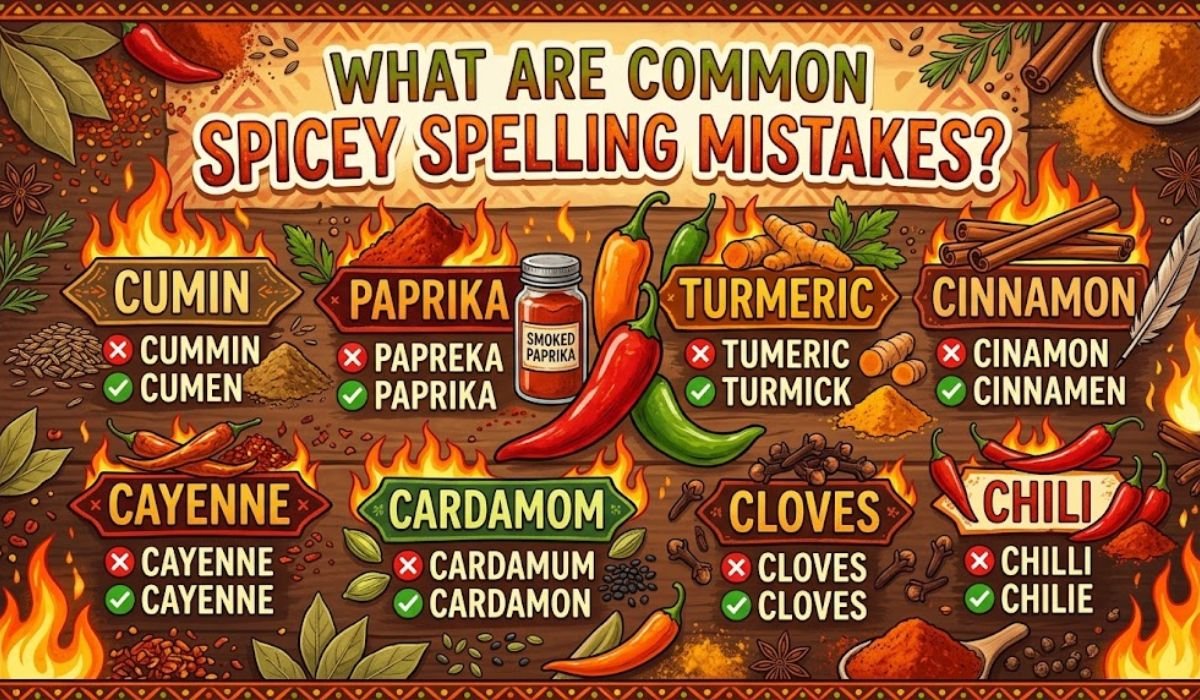
Mistakes with this word are normal, and they usually follow the same few patterns.
Mistake 1: Adding an unnecessary e
Incorrect: This soup is too spicey for the kids.
Correct: This soup is too spicy for the kids.
The e is not part of the word. Drop it before adding -y.
Mistake 2: Misspelling the comparative
Incorrect: This sauce is spiceier than that one.
Correct: This sauce is spicier than that one.
Change the y to i and add -er. No extra e is needed.
Mistake 3: Misspelling the noun form
Incorrect: I love the spiceyness of Thai food.
Correct: I love the spiciness of Thai food.
Mistake 4: Confusing spicy with spice
Incorrect: Add some spicy to the soup.
Correct: Add some spice to the soup.
Spice is a noun. Spicy is an adjective that describes something.
How Is Spicy Different from Hot, Spiced, and Similar Words?
Several nearby words cause confusion, so it helps to separate them.
Spicy vs hot: Hot can mean high temperature or intense heat from chili peppers. Spicy describes flavor from spices. A bowl of soup can be hot (temperature) without being spicy, and a cold salsa can be spicy without being hot.
Spicy vs spiced: Spiced means seasoned with spices, but it does not suggest heat. Spiced cider and spiced cake taste warm and aromatic, not burning. A spicy dish usually has noticeable kick.
Spicy vs piquant or zesty: These are close synonyms. Piquant is more formal and suggests a pleasantly sharp flavor. Zesty suggests brightness and energy.
Antonyms: mild, bland, and plain describe food with little or no spice.
How Can You Remember the Correct Spelling?
A few quick memory tricks make the spelling stick.
- Drop the e from spice. Think of it as “spice loses its e to become spicy.”
- Compare it with ice. If you spell icy without an extra e, spell spicy the same way.
- Picture the ending. Both spicy and juicy end in cy, not cey.
- Use spell-check as backup. If a device underlines your word, trust the correction.
Pricey and dicey are the exceptions that cause the confusion, so treat them as separate cases. Spicy does not follow them.
FAQ’s
Is spicey a word?
No. Spicey is not a standard English word. It is a misspelling of spicy. The only time you will see it is in a personal name, a brand, or a stylized title, where the spelling is a deliberate choice.
What does spicy mean?
Spicy means flavored with spices, often with a hot or sharp taste. Informally, it can also describe something bold, tense, or slightly scandalous, such as a spicy debate.
What is the comparative form of spicy?
The comparative is spicier, and the superlative is spiciest. For example: “This is the spiciest chili I’ve ever tried.”
Why do people spell it spicey?
Many people spell it spicey because of words like pricey and dicey, which keep the e before the -y. Spicy does not follow that pattern. The word is simply spelled with no e.
How do you use spicy in a sentence?
Use it before a noun or after a linking verb. For example: “We ordered spicy ramen,” or “The sauce is really spicy.”
Conclusion
Spicy is the only correct spelling. Spicey is a misspelling that comes from looking at words like pricey and dicey. Spice loses its silent e when the -y ending is added, just like ice becomes icy and juice becomes juicy.
If you remember one thing, remember this: spice drops the e, and spicy never gets it back.

Smith Jason is an SEO expert with 2–3 years of experience, sharing grammar tips, confusing words, vocabulary and writing advice.









1 thought on “Spicey vs Spicy: Which Spelling Is Correct?”