The correct word is “informal.” “Unformal” is not a standard English word. Although you may occasionally see “unformal” written by mistake, it is not recognized as correct in modern American English. If you want to describe something casual, relaxed, or not following strict rules, “informal” is always the right choice.
What Does “Informal” Mean?
Informal is an adjective that describes something relaxed, casual, or not bound by strict rules or formal procedures. It applies to language, clothing, events, relationships, and behavior.
For example, a text message to a friend is informal. A job interview is formal. The word signals ease, familiarity, and a lack of rigid structure.
Informal comes from adding the prefix “in-” (meaning “not”) to the word “formal.” This is the same pattern used in many other English words, such as “inaccurate,” “inactive,” and “incomplete.”
Why Do People Confuse “Unformal” With “Informal”?
The confusion happens because English uses both “in-” and “un-” as negative prefixes, and there is no simple rule that tells you which one applies to which word. Many learners assume “un-” works everywhere since it appears in common words like “unhappy” and “unfair.”
But prefix rules in English were shaped by history, not logic. Some words took “in-” (and its variants “im-,” “il-,” and “ir-“) from Latin, while others took the Old English “un-.” Over time, only one version became the accepted standard for each word, and for “formal,” that word is “informal.”
Is “Unformal” a Real Word at All?
“Unformal” is not listed as standard in major dictionaries, including Merriam-Webster, Oxford, and Cambridge. It does not appear in professional writing, academic work, or edited publications.
You might occasionally spot “unformal” in casual online writing or non-native English text, but this is considered a spelling and usage error, not an accepted variation. If you use it in an email, essay, or report, it will likely be flagged as incorrect by both readers and grammar checking tools.
Informal vs Unformal: Quick Comparison
| Term | Correct? | Meaning | Use |
| Informal | Yes | Casual, relaxed, not following strict rules | Everyday conversation, casual writing, relaxed settings |
| Unformal | No | Not a recognized word | Avoid in all writing |
Read Related Post: Optimize or Optimise: Which Spelling Is Correct?
Grammar Breakdown of “Informal”
Understanding the grammar behind “informal” makes it easier to remember and use correctly.
Part of speech: Adjective
Spelling: i-n-f-o-r-m-a-l
Pronunciation: in-FOR-mul (the stress falls on the second syllable)
Related forms:
- Noun: informality
- Adverb: informally
- Antonym: formal
“Informal” does not change form for singular or plural nouns, since adjectives in English do not inflect based on number. You can say “an informal meeting” or “several informal meetings,” and the adjective stays the same.
How “Informal” Is Used in a Sentence
“Informal” typically appears before a noun or after a linking verb, just like most English adjectives.
Before a noun: She wore an informal outfit to the barbecue.
After a linking verb: The tone of the letter felt informal.
Describing speech or language: He used informal language when texting his coworkers.
Describing an event: The wedding reception was small and informal.
Real Life Examples of “Informal” in Context
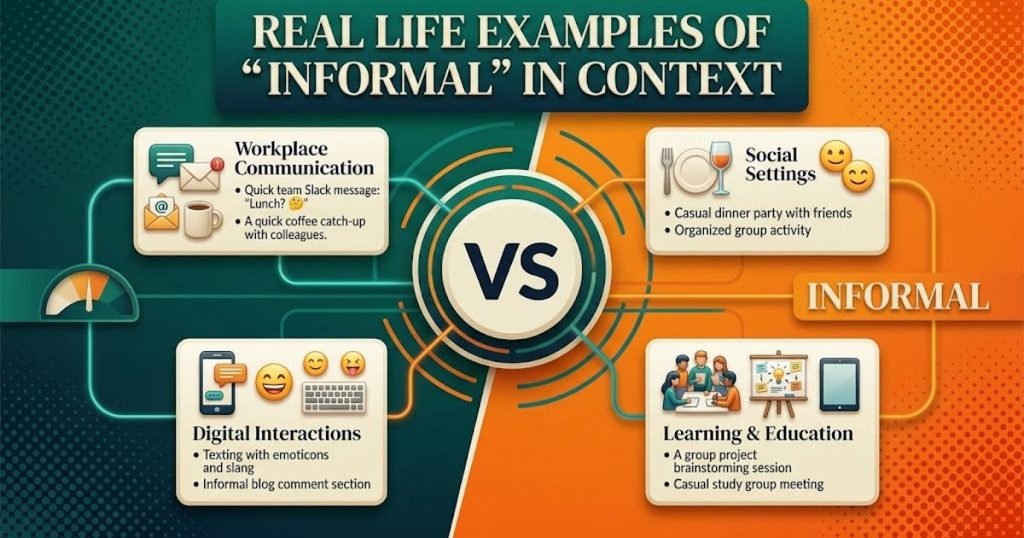
Seeing “informal” used across different situations helps confirm how naturally it fits into everyday and professional English.
Everyday conversation: “Let’s keep the party informal, just snacks and music.”
Workplace communication: “We had an informal chat before the official meeting started.”
Academic writing: “The study notes a shift toward informal communication in modern workplaces.”
Email: “Feel free to reach out anytime, this is meant to be an informal introduction.”
Business writing: “The company adopted a more informal dress code last year.”
Each example works because “informal” clearly signals a relaxed tone or setting without needing extra explanation.
Common Mistakes With “Informal” and “Unformal”
Mixing these two words is a common error, especially among English learners and fast typists. Here are the most frequent mistakes and how to fix them.
Incorrect: The meeting was very unformal, so nobody wore a suit.
Correct: The meeting was very informal, so nobody wore a suit.
Explanation: “Unformal” is not a recognized word, so it should always be replaced with “informal.”
Incorrect: She spoke to her boss in an unformal way.
Correct: She spoke to her boss in an informal way.
Explanation: The correct negative prefix for “formal” is “in-,” not “un-.”
Incorrect: His writing style is too unformal for this report.
Correct: His writing style is too informal for this report.
Explanation: Even in casual writing, “informal” is the standard and expected word choice.
Mistakes like these are common because English prefix rules are inconsistent, not because the reader is doing anything unusual. Once you learn that “formal” pairs with “in-,” the correction becomes automatic.
Words Related to “Informal”
Building a broader vocabulary around this word can help you use it more precisely and avoid confusing it with similar terms.
- Casual: relaxed and relatively unconcerned with formality
- Formal: following established rules, conventions, or etiquette
- Colloquial: describing informal language used in everyday speech
- Relaxed: free from tension or strict structure
- Laid-back: easygoing and unhurried in attitude or style
These words often overlap with “informal” in meaning but carry slightly different shades of tone, so context still matters when choosing the best one.
American English vs British English Usage
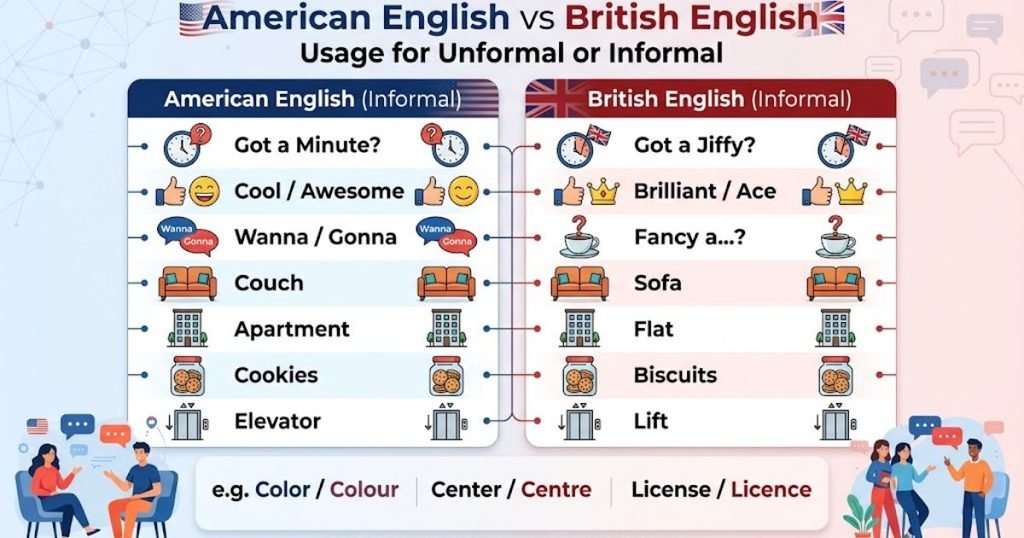
“Informal” is standard in both American and British English, with no difference in spelling, meaning, or usage. Unlike words such as “color” and “colour,” there is no regional variant to worry about here. Whether you are writing for a US or UK audience, “informal” is always the correct and expected form.
How to Avoid Using “Unformal” by Mistake
A simple way to avoid this mistake is to remember that “formal” almost always pairs with “in-” across its related word family, including “informal,” “informality,” and “informally.” If you are ever unsure, try substituting “casual” mentally. If “casual” fits the sentence, “informal” is very likely the word you want.
You can also rely on spell checkers and grammar tools, since “unformal” is typically flagged as an error in most writing software. Reading your sentence aloud can help too, since “informal” tends to sound more natural once you are used to hearing it.
Frequently Asked Questions
Is “unformal” ever correct?
No. “Unformal” is not considered a standard or accepted English word. “Informal” is always the correct choice.
What does “informal” mean in simple terms?
“Informal” means relaxed, casual, or not following strict rules or formal procedures.
How do I use “informal” in a sentence?
Place it before a noun or after a linking verb, such as: “We kept the dinner informal” or “It was an informal gathering.”
Why do people write “unformal” instead of “informal”?
The mistake happens because English uses multiple negative prefixes, including “un-” and “in-,” and there is no single rule for choosing between them.
Is “informality” a real word?
Yes. “Informality” is the noun form of “informal” and describes the quality or state of being casual or relaxed.
Conclusion
If you are ever unsure which word to use, remember this simple rule: “informal” is correct, and “unformal” is not a recognized English word. Keeping this one fact in mind will help you avoid the mistake in emails, essays, conversations, and professional writing going forward.

Smith Jason is an SEO expert with 2–3 years of experience, sharing grammar tips, confusing words, vocabulary and writing advice.










1 thought on “Unformal or Informal: Which Word Is Correct?”